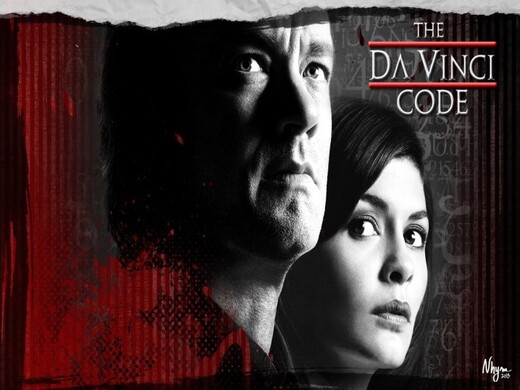
If you are a fan of suspense, conspiracy theories, and historical mysteries, chances are you have read one or more of Dan Brown books. The author of bestsellers such as "The Da Vinci Code," "Angels and Demons," "Inferno," and "The Lost Symbol," Dan Brown has captured the imagination of millions of readers around the world with his gripping plots, larger-than-life characters, and meticulous attention to detail.
But Brown's appeal goes beyond his storytelling skills. His books are also famous for their use of symbols, codes, and hidden meanings that add an extra layer of intrigue and depth to the narrative. Whether it is the symbolism of the Holy Grail, the secrets of the Illuminati, or the enigma of the Fibonacci sequence, Brown's books are full of clues, puzzles, and riddles waiting to be solved.
In this article, we will explore the world of Dan Brown's symbols and codes, and try to unravel some of the mysteries behind them.
The Impact of Dan Brown's Books
Before we dive into the symbols and codes in Dan Brown's books, let's take a moment to appreciate the impact that his works have had on popular culture and literature.
Since the release of "The Da Vinci Code" in 2003, Dan Brown's books have sold over 200 million copies worldwide and have been translated into 56 languages. They have inspired numerous films, TV shows, video games, and even a theme park attraction. They have also sparked debates, controversies, and scholarly research on topics ranging from art history and religious studies to cryptography and semiotics.
But perhaps the most significant impact of Dan Brown's books has been on the reading habits and preferences of millions of readers. His books have shown that thrillers can be smart, educational, and thought-provoking and that historical fiction can be as exciting as any other genre. They have encouraged readers to explore new subjects, learn new facts, and question their assumptions about history, religion, and science.
Moreover, Dan Brown's books have created a community of fans who are passionate about his works and who share their enthusiasm through fan fiction, fan art, online forums, and social media. This community has not only helped to promote Dan Brown's books but also to create a sense of belonging and connection among readers from all over the world.
The Symbols and Codes in Dan Brown's Books
Now let's turn our attention to the symbols and codes in Dan Brown's books. As mentioned earlier, Brown's books are full of hidden meanings and clues that require a sharp eye and a curious mind to uncover. Some of these symbols and codes are based on real-life historical and scientific facts, while others are invented by the author for the purpose of the story.
One of the most famous symbols in Dan Brown's books is the pentacle, a five-pointed star that represents the elements of earth, air, fire, water, and spirit. In "The Da Vinci Code," the pentacle is used as a symbol of the feminine divine and is associated with the character of Mary Magdalene. Brown suggests that the Catholic Church has suppressed the true role of Mary Magdalene in Jesus' life and that the Pentacle is a sign of her importance.
Another famous symbol in Dan Brown's books is the Illuminati, a secret society of scientists and intellectuals who seek to overthrow the Catholic Church and establish a new world order based on reason and enlightenment. In "Angels and Demons," the Illuminati are portrayed as a powerful and dangerous organization that uses ancient symbols and codes to carry out their plans. Brown suggests that the Illuminati are real and that their influence
Most famous and beloved books of Dan Brown
- The Da Vinci Code - This book is perhaps the most famous of all of Dan Brown's works. Published in 2003, it follows the story of Robert Langdon, a Harvard professor of symbology, as he investigates a murder at the Louvre and gets drawn into a centuries-old conspiracy involving the Holy Grail and the secret history of Christianity
- Angels & Demons - Brown's first novel featuring Robert Langdon, Angels & Demons was published in 2000. In this book, Langdon is summoned to the Vatican to investigate the murder of a physicist and the theft of a highly dangerous substance that could be used to create a devastating weapon.
- Inferno - Published in 2013, Inferno sees Robert Langdon once again embroiled in a mystery involving history, art, and a dangerous conspiracy. This time, he must solve a series of clues left by the legendary poet Dante Alighieri in order to stop a madman from unleashing a deadly virus on the world.
- Origin - Released in 2017, Origin is Dan Brown's most recent novel to feature Robert Langdon. This time, Langdon is drawn into a mystery involving science and religion as he attempts to solve a murder and uncover a shocking secret that could change the world forever.
These books have all been hugely popular and have sold millions of copies around the world. They have also been adapted into movies, with The Da Vinci Code and Angels & Demons both starring Tom Hanks as Robert Langdon.
Conclusion
In conclusion, Dan Brown's books have had a significant impact on the literary world and have become some of the most beloved and widely-read works of modern times. His novels are famous for their intricate plots, fascinating characters, and exploration of history, religion, and science.
One of the most remarkable things about Brown's work is his use of symbols and codes, which adds an extra layer of intrigue and excitement to his stories. By using these symbols, Brown takes readers on a journey through history, art, and science, unlocking secrets and unraveling mysteries that have captivated readers for decades.
Brown's books have also had a cultural impact, sparking conversations and debates around religion, science, and history. His work has inspired countless readers to learn more about these topics and has even led some readers to pursue careers in these fields.
Moreover, Dan Brown's novels have been adapted into successful films, with The Da Vinci Code and Angels & Demons being among the most successful literary adaptations in movie history. The films have introduced Brown's work to even more audiences and have cemented his status as a literary giant.
In summary, Dan Brown's books are a must-read for anyone interested in mystery, adventure, and history. His unique writing style and use of symbols and codes have left an indelible mark on the literary world, and his work will undoubtedly continue to inspire and captivate readers for generations to come.